
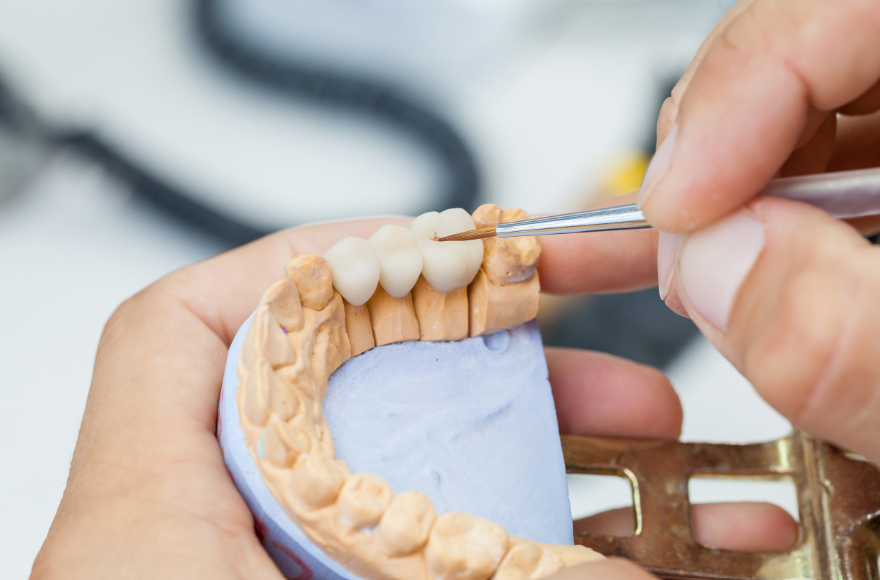
A dental bridge is an excellent way to replace one or more missing teeth, restoring your smile’s appearance and helping you chew and speak comfortably again. Modern dental bridges are durable and can often last 10 to 15 years—or even longer—with proper care. However, like any dental restoration, they aren’t indestructible.
Knowing what can cause a dental bridge to fail can help you protect your investment and enjoy a healthy, functional smile for years to come.
Poor Oral Hygiene
One of the most common reasons a dental bridge fails is inadequate oral hygiene. Although the bridge itself can’t develop cavities, the natural teeth supporting it certainly can.
If plaque and bacteria build up around the bridge, they can cause tooth decay or gum disease around the supporting teeth, known as abutment teeth. If these teeth become weakened, they may no longer be able to support the bridge, leading to failure.
Brushing twice a day, flossing carefully around and beneath your bridge, and scheduling regular dental checkups can go a long way toward protecting both your restoration and your natural teeth.
Damage from Everyday Wear
Dental bridges are designed to withstand normal biting and chewing forces, but they can still become damaged over time.
Chewing on ice, biting your fingernails, opening packages with your teeth, or frequently eating very hard foods can place excessive stress on the bridge. Over time, this pressure may cause cracks, chips, or even loosen the restoration.
If you grind or clench your teeth while sleeping, the constant force can also shorten the lifespan of your bridge. In many cases, wearing a custom nightguard can help protect your restoration from unnecessary wear.
Changes in Your Supporting Teeth or Gums
A bridge depends on healthy teeth and gums for stability. If gum disease develops, the supporting tissues and bone can begin to deteriorate, making the bridge less secure.
Similarly, decay beneath one of the supporting crowns can weaken the tooth without causing immediate symptoms. That’s one reason routine dental exams are so important—they allow your dentist to detect small problems before they become larger ones.
Healthy gums and strong supporting teeth provide the stable foundation your bridge needs to perform well for many years.
A Bridge That No Longer Fits Properly
Over time, natural changes in your mouth can affect the way your bridge fits. Teeth may shift slightly, or normal wear can alter your bite. In some cases, the cement holding the bridge in place may gradually weaken.
If your bridge begins to feel loose, uncomfortable, or different when you bite down, don’t ignore it. Prompt treatment may allow your dentist to repair or recement the bridge before more extensive damage occurs.
Waiting too long can increase the risk of damaging the supporting teeth or requiring a complete replacement.
How to Help Your Dental Bridge Last
While some wear is inevitable, many bridge failures can be prevented with consistent care. Maintaining excellent oral hygiene, avoiding habits that put excessive stress on your teeth, attending regular dental visits, and addressing problems early all contribute to a longer-lasting restoration.
With the right maintenance, many patients enjoy their dental bridges for well over a decade while continuing to smile, eat, and speak with confidence.
Taking good care of your dental bridge today can help you enjoy a healthy, dependable smile for many years to come.
About the Practice
The team at Harris Parkway Dental provides comprehensive restorative dentistry to help patients regain healthy, complete smiles. Their experienced dentists use modern techniques and personalized treatment planning to restore both function and appearance with high-quality dental bridges and other restorative solutions. Whether you’re replacing missing teeth or maintaining an existing restoration, they are committed to helping you achieve lasting oral health.
Call us at (817) 423-2223 or schedule your appointment online.