
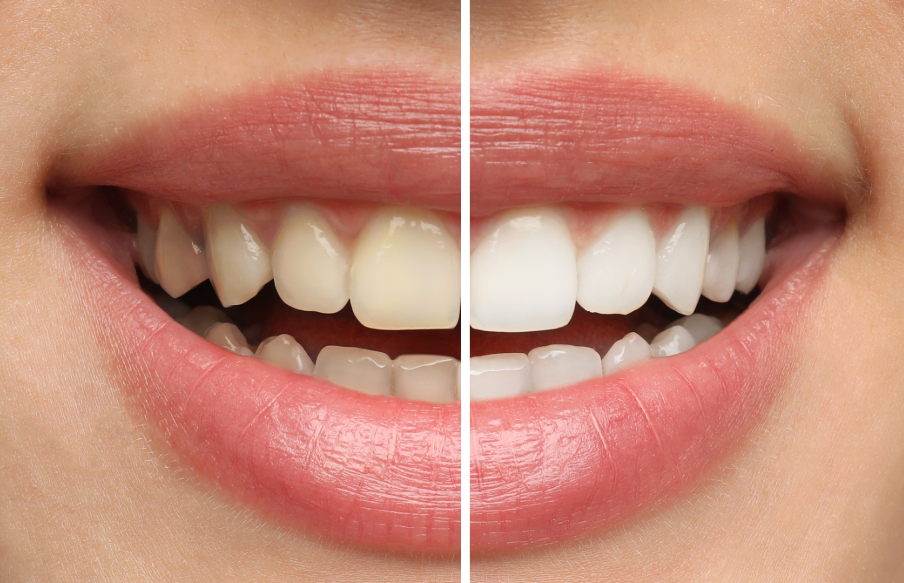
When you picture a healthy smile, you may imagine bright white teeth. But the truth is that natural teeth are not always perfectly white, and a little yellow can be completely normal. In fact, the layer underneath your enamel, called dentin, naturally has a yellowish color. As enamel becomes thinner with age, more of that underlying color can show through.
Still, there are plenty of other reasons teeth can become yellow or develop noticeable stains. The good news? Once you understand what is causing the discoloration, you can explore the most appropriate way to address it.
Food and Drinks
Your favorite morning coffee may be part of your daily routine, but it can also contribute to tooth staining. Coffee, tea, red wine, dark sodas, berries, and other deeply pigmented foods and drinks can leave compounds on the surface of your teeth over time. These are examples of extrinsic stains, meaning the discoloration occurs on the outside of the tooth.
You don’t necessarily have to give up the foods and beverages you enjoy. Rinsing your mouth with water after consuming staining drinks and maintaining good brushing and flossing habits can help minimize buildup.
Tobacco Use
Smoking and other forms of tobacco use can contribute to yellow or brown tooth discoloration. Tobacco stains can become increasingly noticeable over time, particularly when combined with plaque buildup and other sources of staining.
Avoiding tobacco is one of the best ways to protect both the appearance of your smile and your overall oral health.
Aging and Natural Tooth Color
Sometimes, yellow teeth aren’t stained at all. As you age, enamel naturally becomes thinner and more translucent, allowing the yellowish dentin underneath to become more visible. Your natural tooth color is also influenced by genetics, so some people simply have naturally warmer or more yellow-toned teeth than others.
Professional teeth whitening may brighten natural teeth when discoloration is responsive to bleaching. However, whitening cannot change the natural structure or underlying color of your teeth indefinitely.
Medications, Fluorosis, and Trauma
Some discoloration develops within the tooth rather than on its surface. Certain medications, including tetracycline antibiotics taken while teeth are developing, can cause intrinsic discoloration. Excessive fluoride exposure during tooth development can also cause changes in tooth color and appearance. Dental trauma may cause an individual tooth to become darker as well.
These types of discoloration may not respond as predictably to traditional whitening. Depending on the cause and severity, your dentist may recommend options such as professional whitening, bonding, or veneers.
How Can Yellow Teeth Be Addressed?
The right solution depends on the cause. Surface stains may improve with professional dental cleanings and good daily oral hygiene, while natural or deeper discoloration may respond to professional whitening. More stubborn discoloration may require a cosmetic treatment that changes the appearance of the tooth itself.
If you’re concerned about yellow teeth, start with a dental evaluation rather than assuming you simply need a stronger whitening product. A dentist can determine whether you’re dealing with surface staining, natural tooth color, an underlying dental problem, or another type of discoloration.
A brighter smile starts with understanding why your teeth look yellow in the first place.
About the Practice
Harris Parkway Dental is a comprehensive dental practice offering preventive, restorative, and cosmetic dental care. Its cosmetic dentistry services are designed to help patients address aesthetic concerns and achieve smiles that look healthy and natural.
The practice takes a personalized approach to treatment, helping patients understand their cosmetic options and determine which solutions are appropriate for their individual smiles and oral health needs.
Call us at (817) 423-2223 or schedule your appointment online